Christmas in the Mountains: When the Property Dream Doesn’t Last All Year
Retour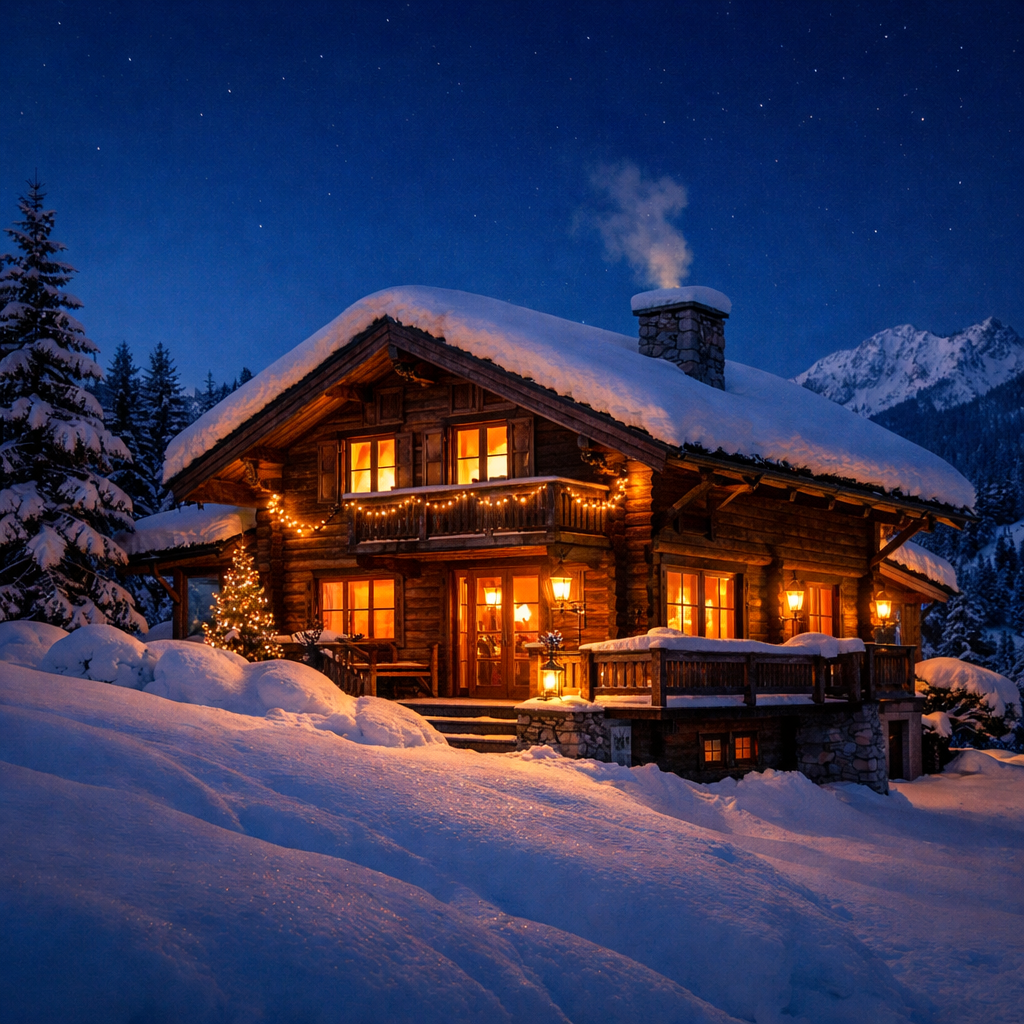
Buying a chalet after Christmas? Beware the emotional trap. Discover how to avoid the classic mistake of mountain property purchases based solely on festive magic.
Introduction – the perfect trap of December
There it is, the scene. Fresh snow muffles all sounds. Chalets smoke gently. Warm lights spill from windows. Inside, a fire crackles, children laugh, glasses clink. And inevitably, the phrase falls: “One day, we’ll have a place like this.”
Every year at Christmas, mountain property has its moment of glory. Not on portals. In minds. The dream settles in, solid, almost obvious. Buy here, live here, pass it on here. The setting is perfect. Too perfect, in fact.
Because what Christmas shows isn’t the reality of a property. It’s a parenthesis. A seasonal staging. And many ill-prepared purchases are born precisely there: in this gap between the December dream and the reality of the entire year.
This article doesn’t aim to shatter the myth. It aims to confront it with reality. Because a property dream that lasts is always a lucid dream.
The Christmas scene: a biased vision of housing
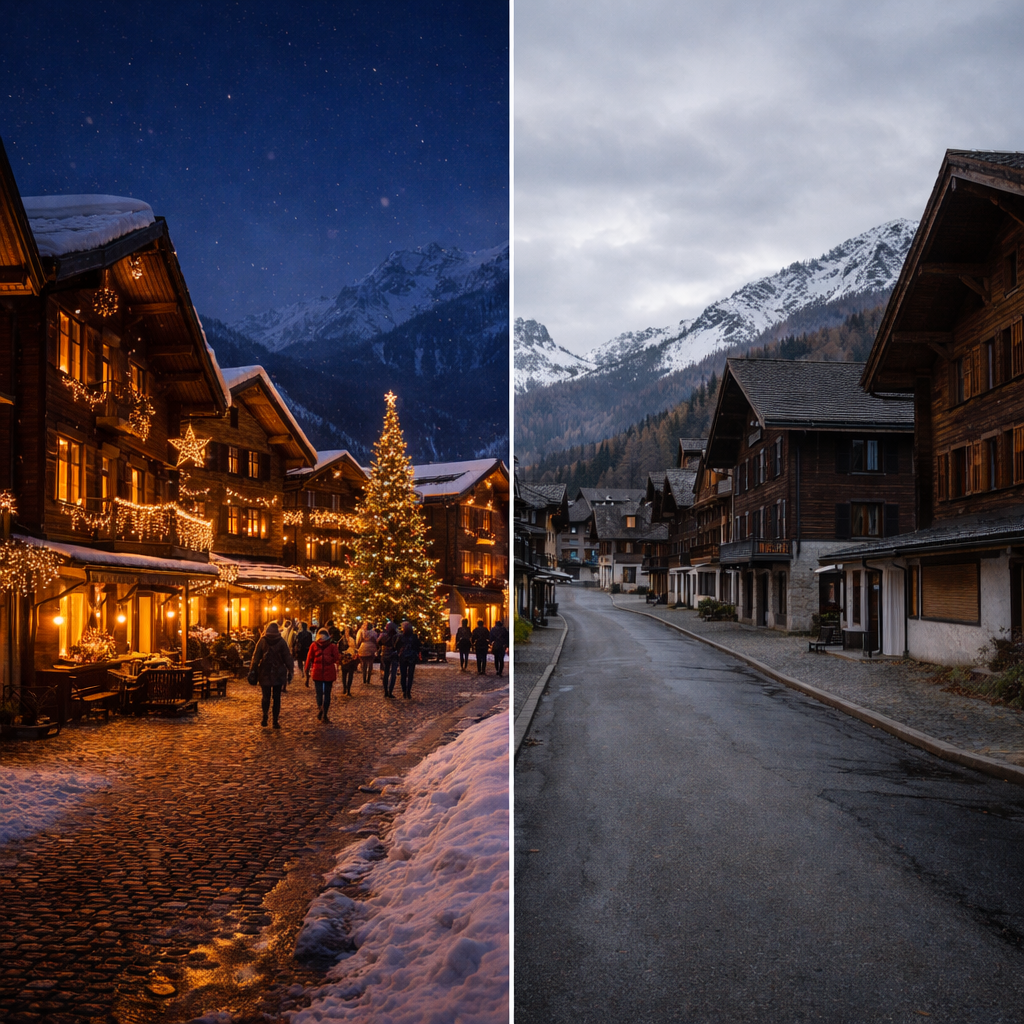
At Christmas, everything works. Or almost.
Roads are cleared. Shops open. Resorts full. Neighbours present. The property is heated full blast, occupied, alive. Nothing creaks. Nothing bothers. Even flaws become charming.
But this vision is deceptive. It corresponds to a few days per year, not a year of living.
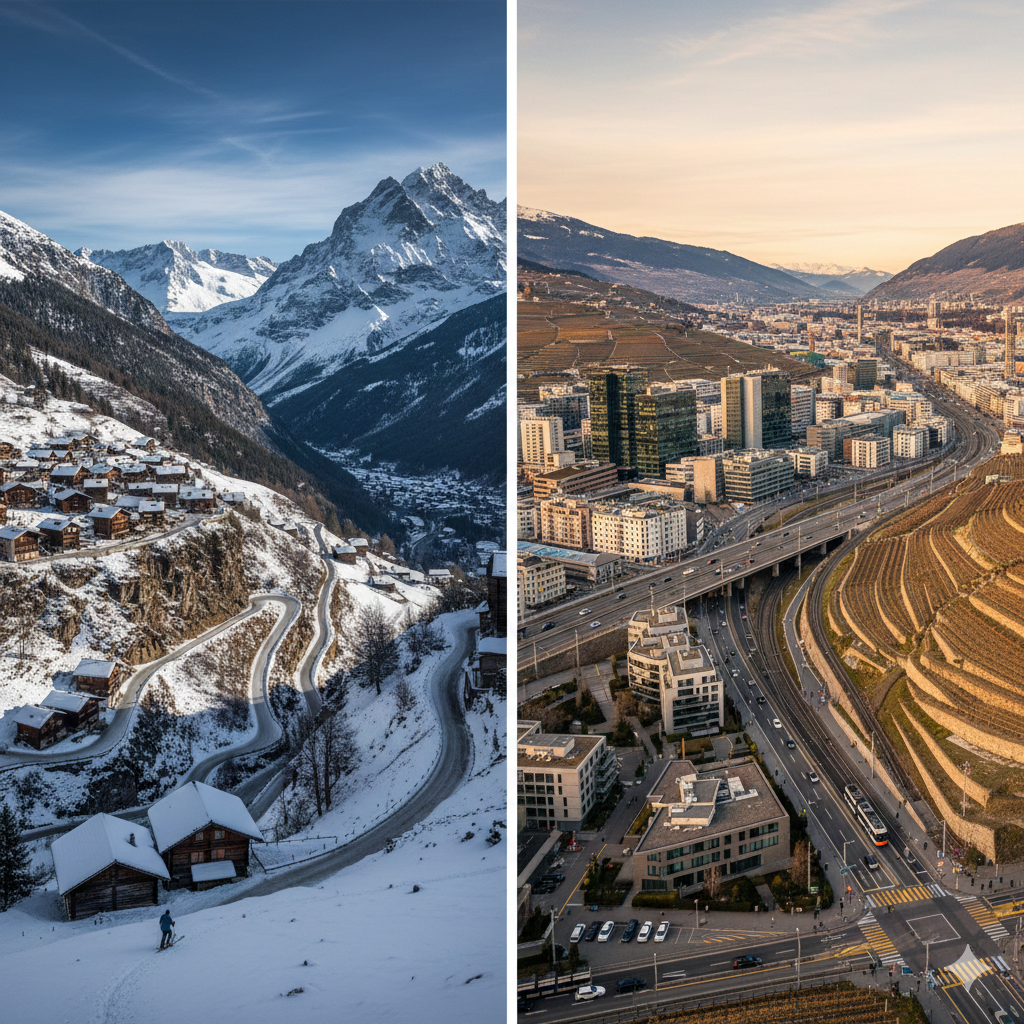
A dark chalet in November, an icy road in February, a nearly empty resort in April, a deserted hamlet off-season… That’s the real daily life that Christmas cleverly masks.
The problem isn’t loving the scene. The problem is believing it’s permanent.
Living for a week isn’t living for a year
During the holidays, you don’t really live in a property. You occupy it.
No professional constraints. Few journeys. No school requirements. Zero heavy logistics. The property is a refuge, not a rear base.
Year-round, everything changes: getting to work becomes an issue, organising travel becomes routine, managing snow is no longer poetic but time-consuming, and anticipating becomes mandatory.
A property perfect for holidays can become burdensome for daily life. And conversely, a less “Instagrammable” dwelling can be infinitely more comfortable long-term.
Buying without making this distinction means confusing emotion with projection.
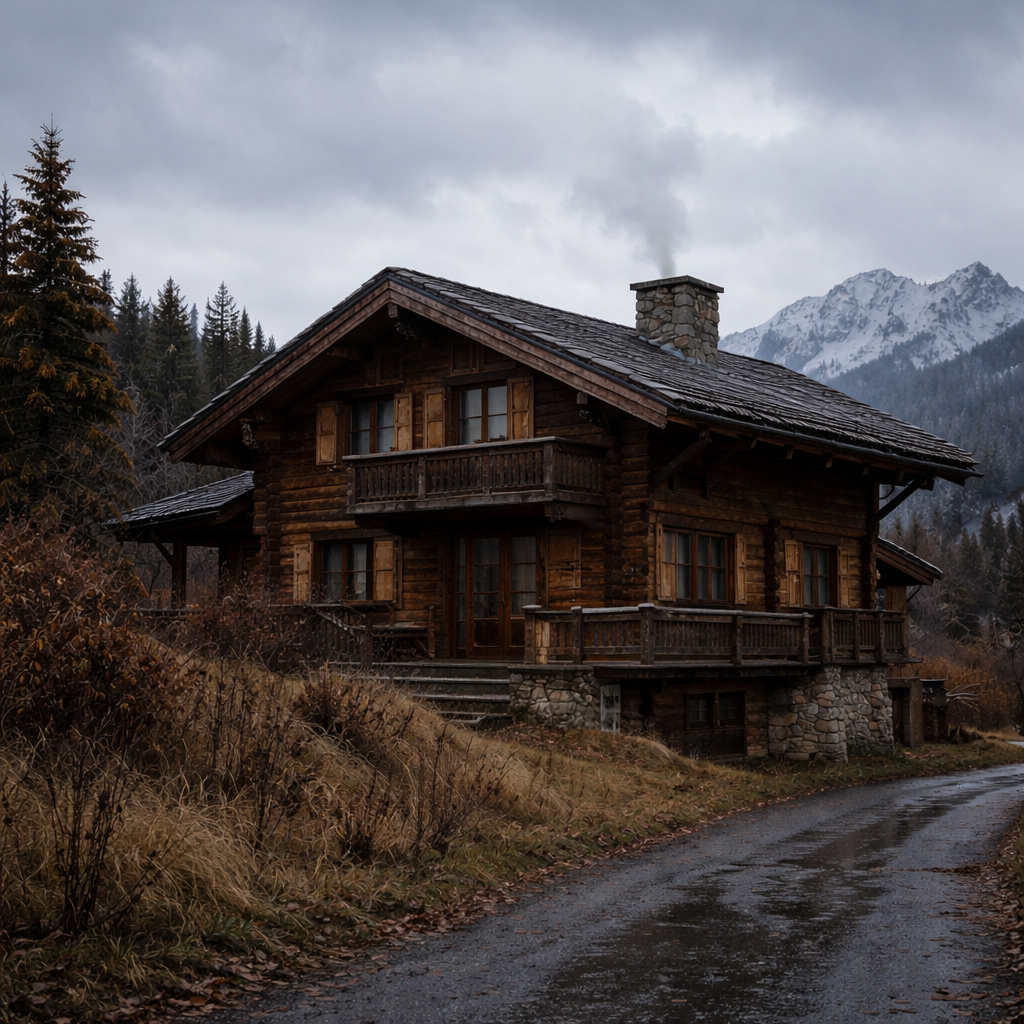
Winter charm often hides thermal reality
At Christmas, the chalet is warm. Always. But at what cost?
Many mountain properties suffer from poor insulation, outdated heating systems, massive heat loss and underestimated energy costs.
What passes for a cosy atmosphere becomes, year-round, a heavy and repetitive bill. Not to mention maintenance, breakdowns, upgrades, or energy renovations imposed in the medium term.
The fireplace is pleasant. The annual invoice much less so.
Buying in the mountains without seriously looking at energy performance means buying a problem on credit.
The ghost neighbourhood: a silent shock
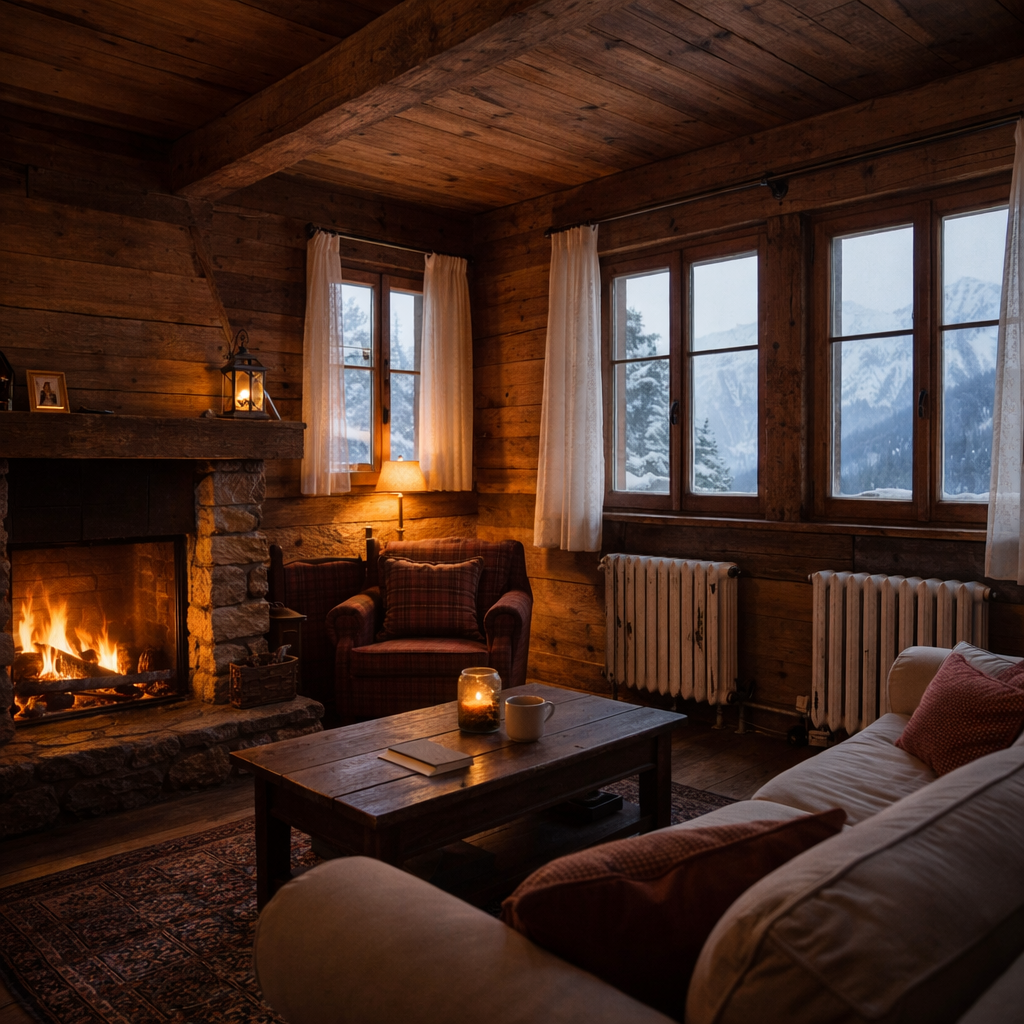
At Christmas, everyone’s there. Chalets are open. Children play. Streets live.
Outside tourist periods, reality is often different: closed shutters, empty second homes, little social interaction, increased sense of isolation.
For some, it’s a luxury. For others, it’s a burden.
This point is rarely anticipated, because it’s not visible during year-end visits. Yet it strongly influences long-term quality of life, especially for families or permanent residents.
Mountains soothe. But they can also isolate.
When the dream becomes an obligation
There’s a very common phenomenon, but rarely admitted.
After purchase, the dream becomes a constraint: obligation to go “to make the most of it”, guilt about leaving the property empty, financial pressure linked to charges, and difficulty changing plans.
What was meant to be freedom becomes rigid commitment. And sometimes, a source of frustration.
A property must accompany a life, not lock it down.
Second home: pleasure or lasting illusion?
Buying a mountain property at Christmas often means buying a second home with your heart.
But a successful second home rests on three clear pillars: actual use (not idealised), controlled charges (not minimised on paper), and ease of resale (even if we never talk about it at the start).
Ignoring one of these pillars amounts to weakening the entire project.
The dream isn’t having a chalet. The dream is still being able to love it in ten years.
How to avoid the classic mistake of emotional buying
It’s not about buying coldly. It’s about buying consciously.
Here are the right questions to ask, especially after a Christmas stay:
Would I come here in November?
Would I accept this logistics every week?
Can I afford this property even if I use it less than expected?
Does this dwelling suit my current life… and future?
A good property purchase withstands the change of season.
The key role of the professional: bringing back reality without killing the dream
A good mountain property adviser doesn’t sell a postcard. They sell a viable project.
Their role isn’t to cool enthusiasm, but to test the project’s solidity, ask the questions the buyer avoids, and project beyond the present moment.
Emotion triggers desire. Expertise secures the decision.
Conclusion – dream, yes. Project yourself truly
Christmas is a formidable revealer. It shows what we want to feel, what we’re looking for, what we project onto a place.
But a successful property purchase doesn’t rest on a perfect moment. It rests on an accepted reality.
Mountains aren’t a frozen scene. They’re a way of life, with their demands, constraints and rewards.
Buying in the mountains after Christmas isn’t a mistake. Buying only because of Christmas is.
The real luxury, today, isn’t the dream. It’s the lucidity that allows it to last.