
Condominiums: Why the Absence of a Renovation Fund Always Costs More
Retour
No renovation fund in your condominium? Discover why this absence always costs more: emergencies, conflicts, devaluation and unexpected bills. Practical guide for co-owners.
There’s a scene every property professional knows. Condominium general meeting. Room slightly too small. Heavy agenda. And suddenly, the phrase that shifts the atmosphere: “We need to replace the roof. And there’s no renovation fund.”
Silence. Evasive glances. Mental calculations. Rising tensions.
That moment alone sums up a recurring problem in condominiums: not anticipating always costs more than planning ahead. Financially, humanly and in terms of property value.
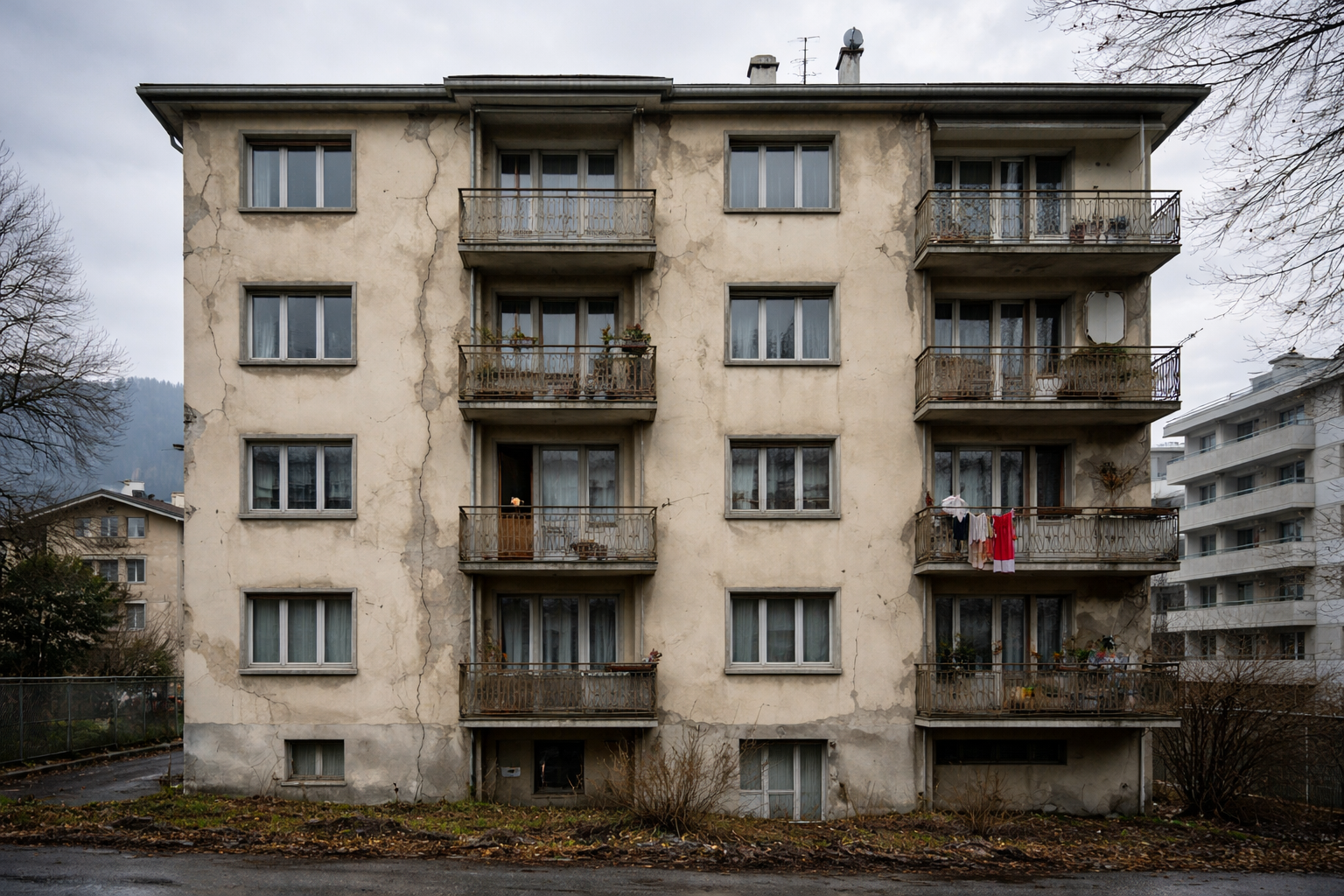
The persistent myth: “we’ll see later”
In many condominium properties, the idea persists that a renovation fund is secondary, even useless. Why tie up money now for hypothetical works in ten or fifteen years?
On paper, the reasoning seems logical. In reality, it’s dangerous.
A building doesn’t negotiate with time. Installations age. Standards evolve. Energy requirements tighten. And the building follows only one trajectory: that of wear.
Postponing rarely means saving. It mainly means deferring a bill that’s growing.
When urgency replaces strategy
The absence of a renovation fund transforms every technical problem into a crisis.
A boiler that breaks down in mid-winter, a cracking façade, failing roof waterproofing, a lift that’s become non-compliant… Without financial reserves, there’s no longer choice. There’s urgency. And urgency costs money.
Works carried out in haste, reduced negotiating margins, poorly received extraordinary levies, conflicts between co-owners… Management becomes defensive, sometimes chaotic.
Conversely, a renovation fund allows you to decide, not to suffer.
The real hidden cost: human tensions
We often talk about money, but rarely about human impact.
An unexpected levy of several tens of thousands of francs per unit isn’t neutral. Not everyone has the same financial capacity. And that’s where lines become tense: co-owners in difficulty, blockages at meetings, decision postponements, conflictual votes, lasting resentment.
Result: works are delayed, the building continues to deteriorate, and the final bill increases further.
The absence of a renovation fund is often the trigger for the worst conflicts in condominiums.
Preserving value isn’t a slogan
A poorly maintained building is immediately noticeable. And the market doesn’t forgive.
Buyers and investors today look at the building’s technical condition, work planning, the existence (or not) of a renovation fund, and management quality.
A condominium without reserves is perceived as poorly anticipated, therefore risky. Direct consequence: downward pressure on prices, tougher negotiations, longer selling times.
Conversely, a well-constituted renovation fund sends a clear signal: monitored building, responsible management, controlled future.
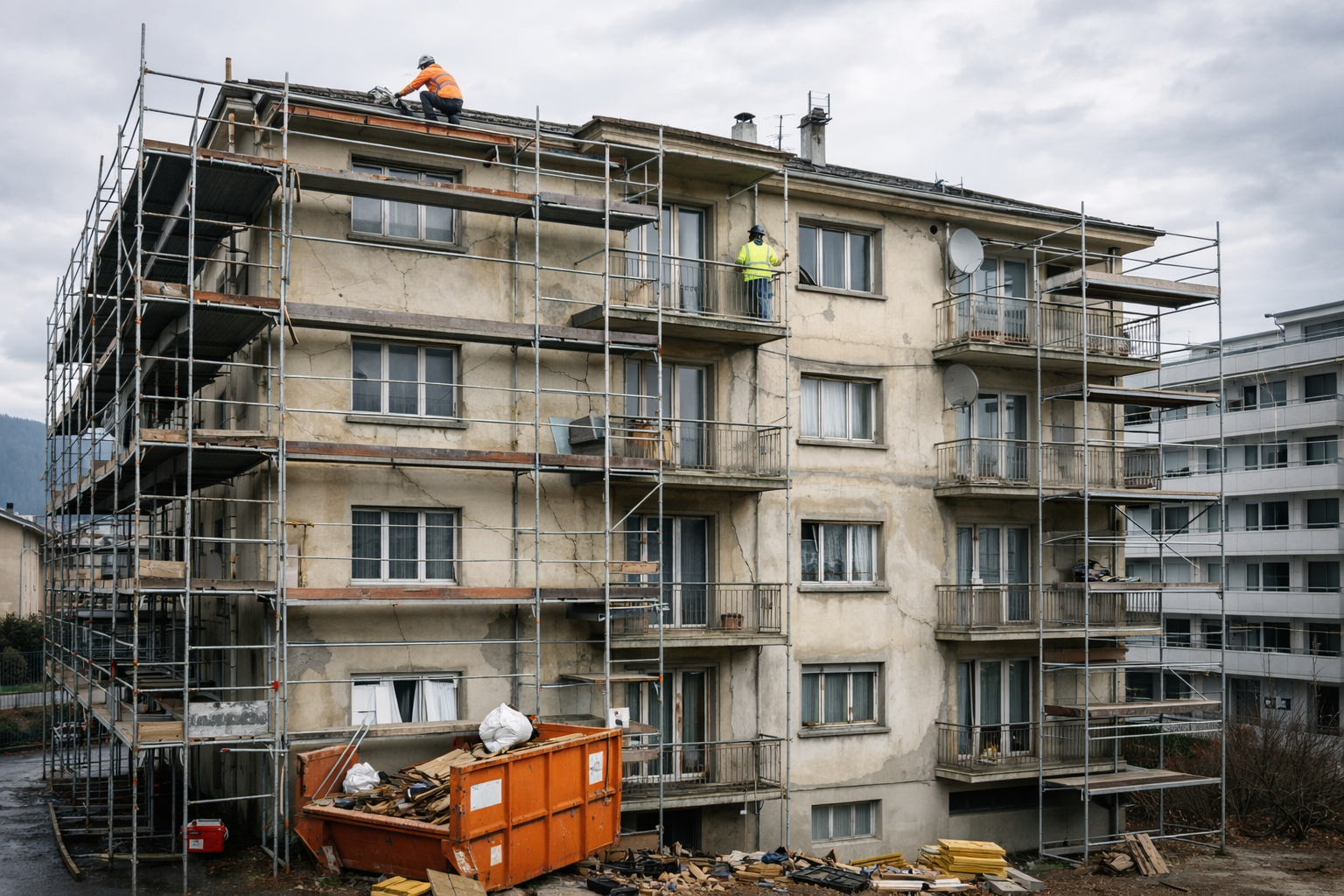
Energy transition: without funds, no strategy
Energy renovation is no longer optional. Heat pumps, façade insulation, window replacement, solar panels… These works are heavy, costly, but unavoidable.
Without a renovation fund, it’s impossible to plan, difficult to obtain financing, access to subsidies is limited, and decisions are postponed until they become urgent.
With a fund, projects are structured, investments are smoothed, future charges are reduced, and the building’s energy value progresses.
Energy transition must be prepared. It cannot be improvised.
Insurance, claims and nasty surprises
An ageing, poorly maintained building also means more claims, more excesses, and sometimes insurance premiums revised upwards.
Regular maintenance, made possible by a financial reserve, reduces risks. Less water infiltration, fewer breakdowns, fewer emergency interventions.
Once again, anticipating costs less than repairing.
The renovation fund as a tool for freedom
Contrary to common belief, a renovation fund isn’t a constraint. It’s a tool for collective freedom.
It allows choosing the right moment to intervene, comparing companies without pressure, spreading costs fairly, and deciding serenely at meetings.
Without a fund, the condominium suffers the calendar of breakdowns. With a fund, it controls its future.
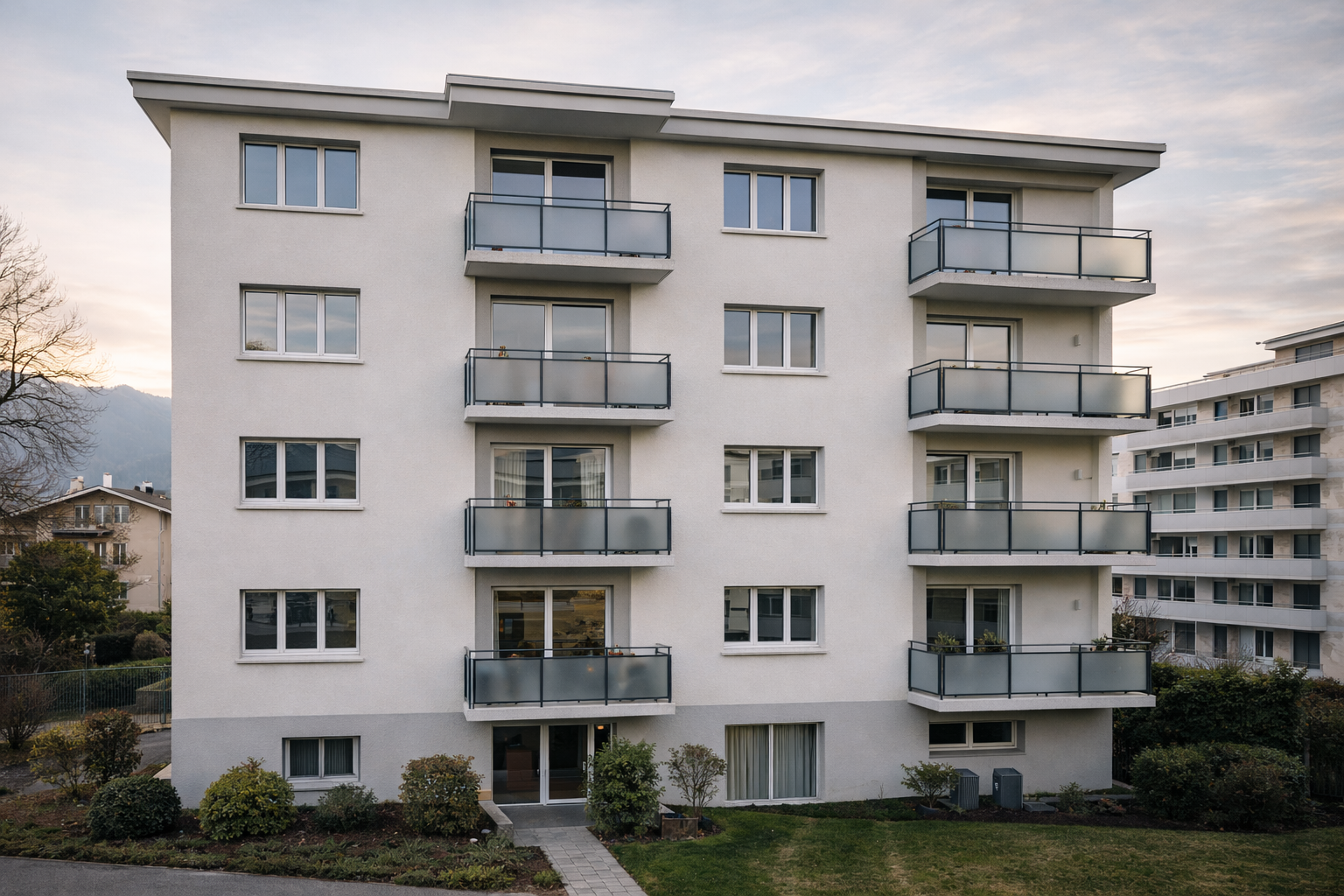
Why some condominiums still refuse to believe in it
The reason is rarely technical. It’s psychological: fear of paying for future co-owners, short-term vision, lack of information, and excessive confidence in the building’s solidity.
But the reality is simple: every co-owner benefits from maintenance, today or tomorrow. And those who enter a condominium with an existing fund also pay their share, integrated into the property price.
The renovation fund isn’t a loss. It’s a transmission of value.
What field experience shows
Well-managed condominiums have three things in common: a long-term vision, a coherent renovation fund, and decisions made before urgency strikes.
Others accumulate delays, frustrations, unexpected costs, and progressive devaluation.
It’s not a question of building size or standing. It’s a question of management culture.
In summary: paying less means planning earlier
The absence of a renovation fund doesn’t make costs disappear. It displaces them, increases them and makes them more painful.
Building up a reserve means protecting your property, securing your cash flow, easing relations between co-owners, preparing for energy transition, and maintaining resale value.
In a condominium, real economy never means postponing. Real economy means anticipating intelligently.

Conclusion: a collective decision… but an individual impact
Every co-owner is concerned. Today or tomorrow. At the next breakdown or the next project.
The question isn’t whether works will take place. The only question is: under what financial and human conditions?
And on this point, experience is clear: the absence of a renovation fund always costs more.